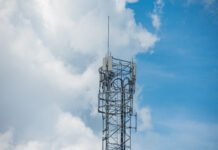

India is developing its 5G at a rate that has never been achieved before. Telecom operators are quickly building 5G networks in metro cities and in the case of the Tier-2 towns and in the rural areas as well since its commercial rollout in 2022. India is one of the fastest nations in the world to implement 5G today, and this process happens due to the robust competition between the service providers and the growth of the need in the high-speed data services.
Faster internet is not the only thing about the expansion of 5G networks. It is concerning facilitating digital transformation in the sphere of healthcare, manufacturing, logistics, education, and smart cities.
Nevertheless, with 5G services expanding domestically, telecommunication providers should also be ready to meet the expanding international connectivity requirements. It is at this point that roaming steering becomes strategically important.
The Increasing Speed of 5G Roaming.
As the number of Indian consumers travelling internationally and international companies entering the business operations internationally, 5G roaming has become critical. The subscribers would also demand high-speed connectivity 24/7 even when they are not within their home networks.
Roaming steering is very important in making sure that the subscribers are connected to the choice networks of the partner networks and still have quality services and at affordable costs. Operators can guard margins and guarantee consistent performance to users by cleverly routing roaming traffic to specific networks.
With the growing number of 5G roaming deals worldwide, roaming steering assists operators to strike the right balance between network quality, pricing deals and regulation. Without appropriate steering mechanisms, moving traffic can be linked with non-optimal networks, which cause increased costs and deteriorated user experiences.
Operation Problems in 5G Rollout.
Implementation of the 5G infrastructure is costly in terms of capital. The acquisition of spectrum, densified towers, fiber backhaul, and advanced core networks are very costly. Operators have to optimize revenue streams to get a payback on investment, and this includes international roaming services.
In this regard, roaming steering is not just a technical gimmick; it is a revenue maximizing technique. Telecom operators can minimize the cost of wholesale roaming by dynamically setting roaming preference to the network in accordance to the performance and commercial agreement to alleviate network congestion as well as enhance subscriber satisfaction.
Moreover, with 5G network slicing and the differentiated levels of services, roaming steering systems have to change to provide more intricate traffic patterns. The intelligent steering will provide the premium users, enterprise clients, and IoT devices with the relevant connectivity when it is time to roam across the borders.
The Future of the Indian 5G Ecosystem.
The 5G journey of India has not ended. Although the urban coverage is growing at a pace, increased rural penetration and isolated 5G core implementation are still on the agenda. Meanwhile, the international 5G roaming systems are currently maturing, and this opens new possibilities of international service provision by the operators.
The 5G future in India is not only related to coverage but also related to smart network management. The operators, which integrate fast deployment with the optimization of roaming steering plans will be in a better position to achieve sustainable growth in the changing telecommunication environment.